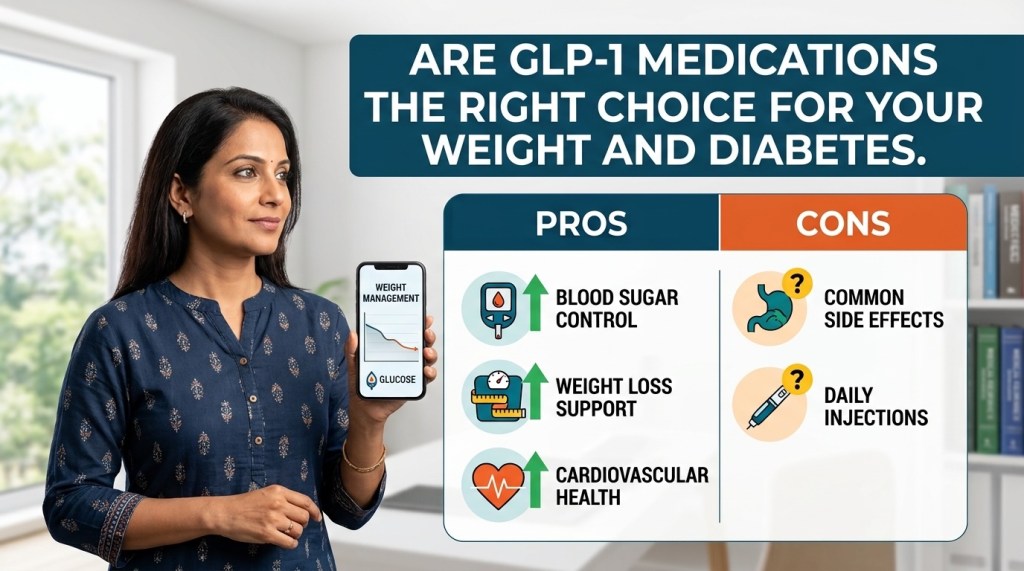
Whenever a new class of medicines is as well received as GLP-1 receptor agonists, people become concerned about how well the medication works for them personally. This aspect of the medicines deserves more attention than the medicines normally receive. The medicines are suitable for certain patients but completely unsuitable for others, requiring specific considerations.
To make this decision properly, it is important to understand how to present it, what to discuss with the physician, and what constitutes successful treatment.
Key Takeaways
- GLP-1 medications are most appropriate for adults with type 2 diabetes who have not achieved adequate control, or for those with obesity and related health conditions.
- Specific personal and family medical history details, particularly around the thyroid and pancreas, are important eligibility factors.
- These medications work best as part of a broader plan that includes dietary awareness and physical activity, not as standalone fixes.
- A structured medical assessment before starting is non-negotiable, as individual clinical profiles significantly affect both suitability and expected outcomes.
Who Is Most Likely to Benefit
The strongest available evidence supporting the use of GLP-1 receptor agonists comes from two overlapping groups of patients. The first group consists of patients who are 18 years or older, have type 2 diabetes mellitus, and are unable to achieve optimal glycaemic control with oral antidiabetic medications. This group of patients also includes those with serious metabolic disorders, commonly linked with high body mass indices.
The second group of patients consists of adults with a BMI of 30 and above or a BMI of 27 and above and at least one obesity-related comorbidity like high blood pressure or obstructive sleep apnoea.
Within those broad groups, certain patient profiles show the most consistent and meaningful response:
- Those with established cardiovascular disease or high cardiovascular risk, for whom some agents in this class have demonstrated significant reductions in major adverse cardiac events.
- Patients with non-alcoholic fatty liver disease, where weight loss alongside the direct hepatic effects of GLP-1 therapy produces measurable improvement in liver fat content.
- Individuals who have repeatedly attempted calorie-restricted dieting without sustained success, suggesting a hormonal basis for their difficulty that pharmacotherapy can address.
- Patients whose type 2 diabetes is associated with significant insulin resistance and hyperinsulinaemia, where the glucose-dependent insulin stimulation and appetite suppression of GLP-1 therapy address both the symptoms and part of its driver.
Who Should Approach With Caution or Avoid Entirely
While GLP-1 therapy may not be equally suitable for everyone, it is compelling to point out that specific histories require unique conversations prior to any prescription being written. A person’s or family’s history of medullary thyroid carcinoma or Multiple Endocrine Neoplasia type 2 is a clear contraindication, based on cautionary regulatory guidance from animal studies. The personal history of pancreatitis also must be assessed with caution owing to the pancreatic mechanism of action that these medications have.
Patients suffering from severe gastroparesis must be prudent since the process of gastric emptying will be impaired even further. People who are pregnant or planning a pregnancy should refrain from the use of these medications.
Patients suffering from severe kidney impairment also should have a specific medication review performed because some agents cannot be used depending on the thresholds of renal function.
Questions Worth Asking Before Starting
Individuals gearing up to talk with their healthcare provider about GLP-1 therapy should ideally arrive with a set of specific questions rather than merely showing up for a discussion shaped by what they read in the media.
Some valuable questions are about examining whether the cardiovascular risk is sufficiently high for one to benefit from the aforementioned medicines’ cardiovascular protective qualities, whether adjustments in the diabetes treatment plan should be made when adding the new medicine, what the reasonable timeline for weight loss and reduction in HbA1c level is based on personal past history, and how the new prescription interacts with the existing medications.
Understanding the Range of Options
The growing category of GLP‑1 for Diabetes & Weight Loss therapies includes agents with different receptor targets, dosing schedules, and approved indications. Single-receptor GLP-1 agonists work through the GLP-1 pathway alone. Dual-receptor agonists activate both GLP-1 and GIP receptors simultaneously, producing a broader metabolic effect, as reflected in stronger clinical trial outcomes for blood sugar control and weight loss.
Tirzepatide is the first dual GIP and GLP-1 receptor agonist approved for the treatment of type 2 diabetes and obesity. Its SURPASS and SURMOUNT clinical programmes produced consistently stronger HbA1c and weight loss outcomes than any previously approved agent in this class, making it particularly relevant for patients with both conditions who have not achieved their treatment goals with other approaches.
Mounjaro 2.5mg is the standard starting dose used in the initial weeks of tirzepatide therapy via the KwikPen delivery device. Beginning at this lower dose before stepwise escalation significantly reduces the intensity of gastrointestinal side effects, which are most common during dose adjustment, thereby improving early tolerability and long-term adherence.
What Success Actually Looks Like
Before commencing with the treatment, the importance of setting realistic expectations must be borne in mind. Most people experience a significant decrease in their appetite in the first two or four weeks of the treatment.
The first appreciable changes in the patient’s weight usually occur within six to twelve weeks of the start of treatment. Improvement in HbA1c is usually observed after the first 3 months. The greatest desirable weight loss and glycemic effects can be achieved with the highest tolerated dosage within six to twelve months of treatment.
The misconception about what success entails may include rapid, significant change in the early stages of treatment and the consequent maintenance of weight loss without any effort. Any patient who combines a medication-induced decrease in appetite with healthy eating and physical activity will achieve much better results than those who rely solely on the medication.
Managing Side Effects During Treatment
Gastrointestinal effects are most frequently the reason patients consider discontinuing treatment early on. Nausea, diarrhoea, and lack of appetite are common symptoms and generally resolve in four to eight weeks.
Consuming smaller portions and low-fat foods during the adaptation stage, slowing eating, and maintaining adequate hydration can reduce symptom severity without compromising treatment benefits.
Any persistent abdominal discomfort or severe nausea that doesn’t go away should be discussed with a doctor rather than acting independently.
Importance of Follow-Up Care
Beginning GLP-1 treatment marks the start of a continuous clinical relationship, not merely a single choice. Blood sugar and HbA1c are monitored regularly to inform dosage decisions. Weight, blood pressure, and kidney function are also monitored to assess the overall metabolic response.
Changes to other treatment, especially regarding insulin or sulphonylureas, may be necessary as blood sugar stabilises to prevent hypoglycaemia.
What Is Worth Remembering
GLP-1 medications are the right choice for many patients, but right for many is not the same as right for all. The decision belongs in a properly conducted medical consultation that accounts for individual health history, current medications, metabolic risk profile, and personal treatment goals.
For patients who are appropriate candidates and who engage with the treatment as part of a broader lifestyle effort, the outcomes that these medications can support are among the most meaningful available in current metabolic medicine.
Disclaimer: This article is for general informational purposes only and does not constitute medical advice. Always consult a qualified healthcare professional before starting, stopping, or modifying any medication or treatment plan.


Leave a comment